
901744

2-(5-(3-(4-(2-Bromo-5-fluorophenoxy)piperidin-1-yl)isoxazol-5-yl)-2H-tetrazol-2-yl)acetic acid
Synonym(s):
Aryl halide chemistry informer library compound X9
About This Item
Recommended Products
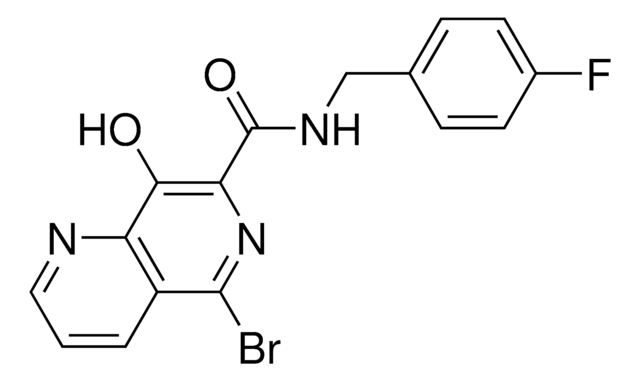
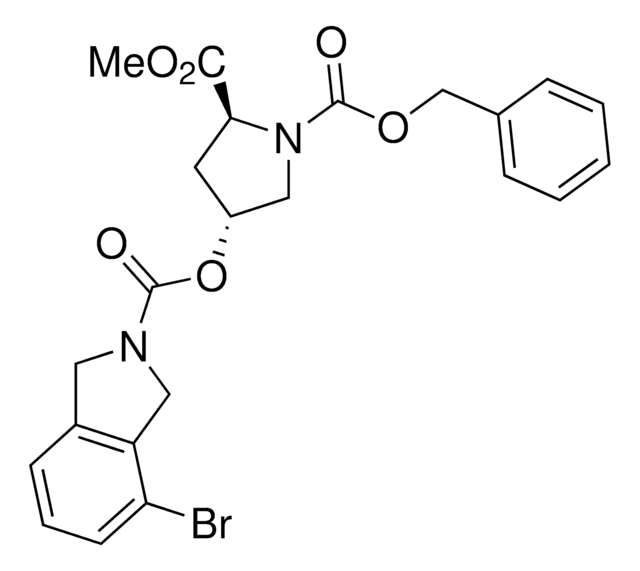
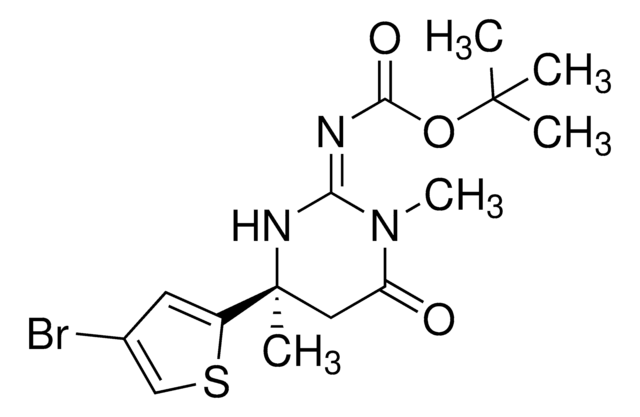
![(R)-2-(5-Bromo-4-(4-chlorobenzyl)-7-fluoro-1,2,3,4-tetrahydrocyclopenta[b]indol-3-yl)acetic acid](/deepweb/assets/sigmaaldrich/product/structures/321/793/9c59bf88-c483-4a85-a559-53ba29e916d1/640/9c59bf88-c483-4a85-a559-53ba29e916d1.png)
![tert-Butyl (R)-3-(2-acetamidopropan-2-yl)-6-chloro-5-methyl-2,3-dihydrospiro[indene-1,4′-piperidine]-1′-carboxylate](/deepweb/assets/sigmaaldrich/product/structures/719/283/e2c466e0-b4df-4961-9844-bfffbe187f3e/640/e2c466e0-b4df-4961-9844-bfffbe187f3e.png)
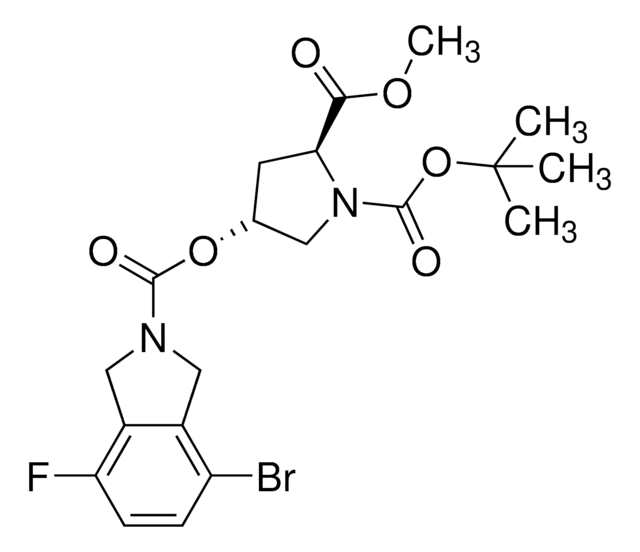
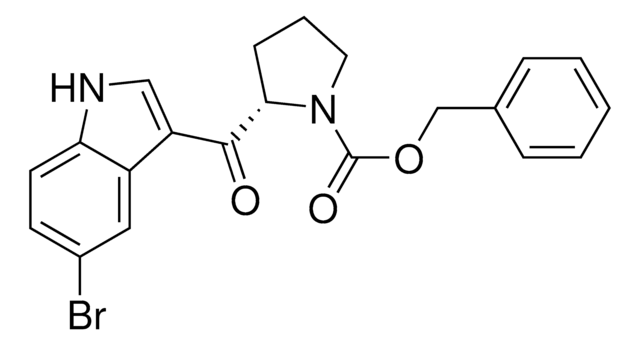
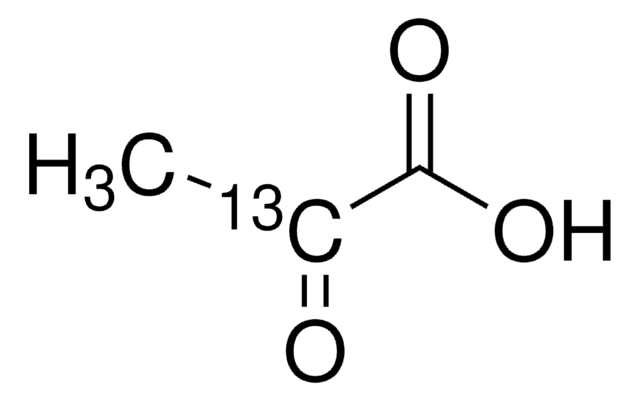
![(S)-6-Chloro-4-(cyclopropylethynyl)-4-(trifluoromethyl)-1,4-dihydro-2H-benzo[d][1,3]oxazin-2-one](/deepweb/assets/sigmaaldrich/product/structures/243/541/d5c488f9-cd03-4bf8-8fe0-56dd8f960d6f/640/d5c488f9-cd03-4bf8-8fe0-56dd8f960d6f.png)
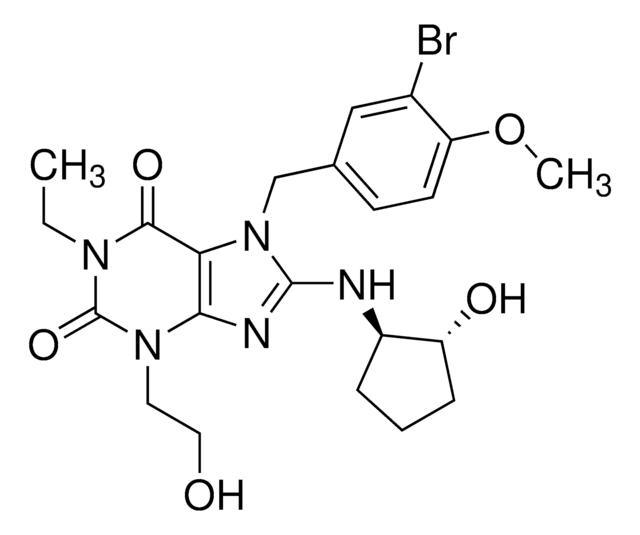
form
powder or crystals
availability
available only in USA
functional group
bromo
carboxylic acid
fluoro
SMILES string
Fc1cc(c(cc1)Br)OC2CCN(CC2)c3n[o]c(c3)c4n[n](nn4)CC(=O)O
InChI
1S/C17H16BrFN6O4/c18-12-2-1-10(19)7-13(12)28-11-3-5-24(6-4-11)15-8-14(29-22-15)17-20-23-25(21-17)9-16(26)27/h1-2,7-8,11H,3-6,9H2,(H,26,27)
Inchi Key
UJEAABFSXKCSGI-UHFFFAOYSA-N
Application
Caution
related product

signalword
Danger
hcodes
Hazard Classifications
Self-react. C
Storage Class
5.2 - Organic peroxides and self-reacting hazardous materials
wgk_germany
WGK 3
flash_point_f
Not applicable
flash_point_c
Not applicable
Choose from one of the most recent versions:
Certificates of Analysis (COA)
It looks like we've run into a problem, but you can still download Certificates of Analysis from our Documents section.
If you need assistance, please contact Customer Support
Already Own This Product?
Find documentation for the products that you have recently purchased in the Document Library.
Our team of scientists has experience in all areas of research including Life Science, Material Science, Chemical Synthesis, Chromatography, Analytical and many others.
Contact Technical Service


